
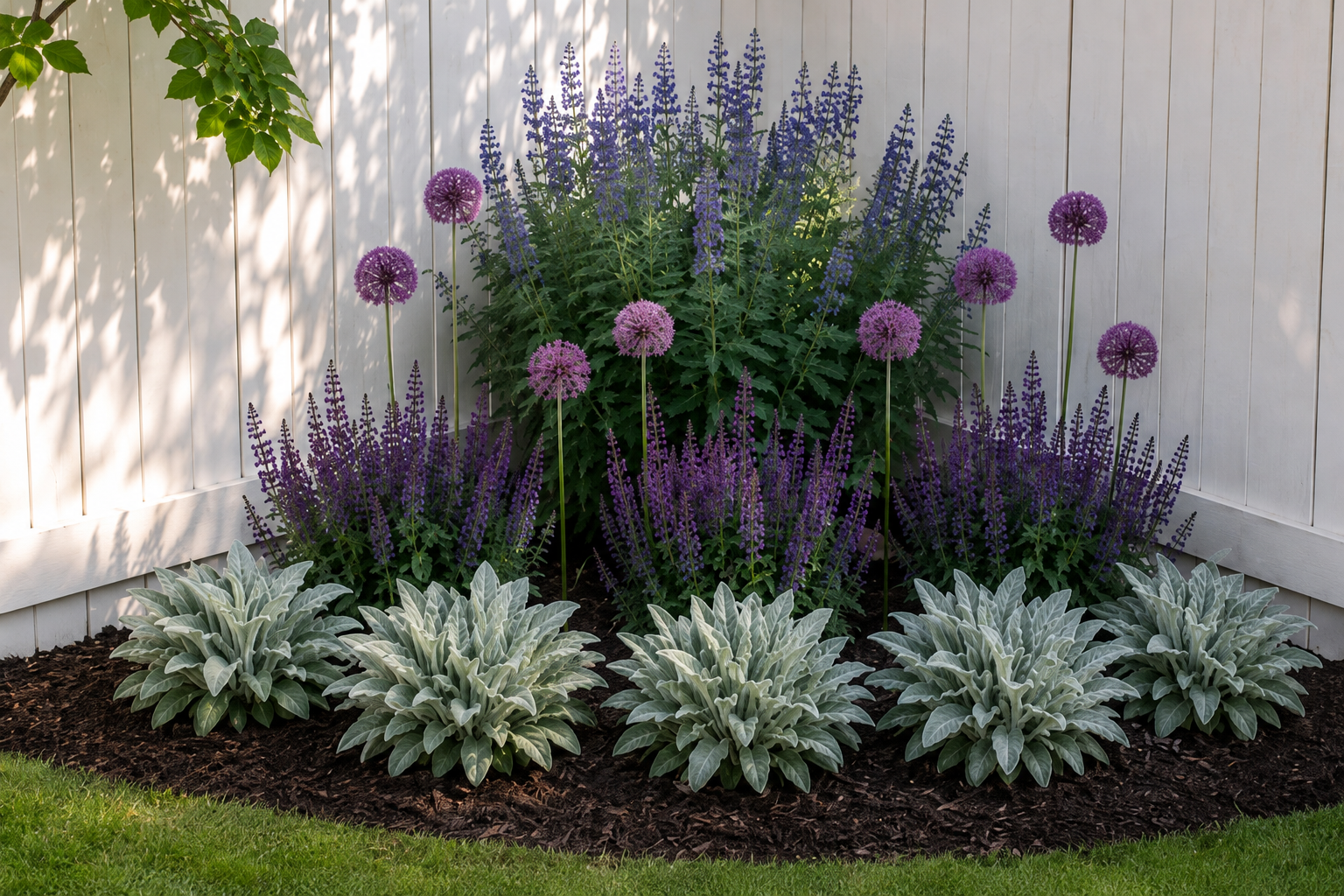
A deer-resistant garden does not have to look harsh, sparse or overly practical. The secret is to begin with plants deer usually find less appealing, then arrange them with the same attention to color, rhythm and softness you would give any cottage-style border.
An honest promise: deer-resistant never means deer-proof. Browsing changes with location, season, deer pressure and food availability. A hungry deer may sample almost anything.
Start with what deer tend to avoid
Plants with aromatic, fuzzy, tough or otherwise unappealing foliage are useful starting points. University of Minnesota Extension recommends combining resistant plants with other prevention methods and notes that fragrance or texture can make certain plants less attractive. Its list includes ornamental alliums, blue salvia and lamb’s ear—the same qualities that make a purple-and-silver border feel cohesive. Read the university’s deer-damage guidance.
Build romance with layers, not a single flower
A romantic garden feels abundant because each height has a purpose. For a small corner bed, use a simple three-layer composition:
Tall anchors
Blue false indigo creates structure and a calm backdrop.
Flowering middle
Violet salvia and floating allium globes add rhythm and movement.
Soft edging
Silver lamb’s ear traces the bed with velvety texture.
Repeat each plant in a generous drift instead of scattering one of everything. Repetition makes a small bed feel intentional, while overlapping foliage keeps the planting lush after individual flowers fade.
Let a limited palette do the work
Purple and silver are especially effective together. Deep violet gives the garden a focal color; silvery foliage brightens the lower layer and softens the edge. Green becomes a quiet bridge between them. Keeping the palette restrained lets different flower shapes—spires, globes and airy stems—feel collected rather than busy.
Match every plant to the actual site
Deer resistance cannot compensate for the wrong light, soil or hardiness zone. Check the plant label for the cultivar you are buying, confirm drainage and observe how many hours of direct sun the bed receives. A healthy plant suited to its location is better able to establish and recover from occasional damage.
Protect the garden while it settles in
- Watch new growth closely. Spring shoots and newly planted specimens can invite sampling.
- Act before browsing becomes a habit. Deer often return to familiar feeding areas.
- Use more than one strategy. Repellents, temporary netting or a physical barrier may help during vulnerable periods; always follow product labels and local rules.
- Keep expectations realistic. Extension guidance recommends a proactive, combined approach rather than expecting any single plant or deterrent to eliminate damage.
The goal is not to make a garden deer can never enter. It is to create a beautiful planting that is less tempting, thoughtfully protected and resilient enough to remain lovely.
Begin with a graceful purple-and-silver plan
My 6 × 6-foot Deer-Resistant Corner Garden is designed for part sun in USDA Zones 5–8, with a measured layout, plant list and finished-garden visualization.