
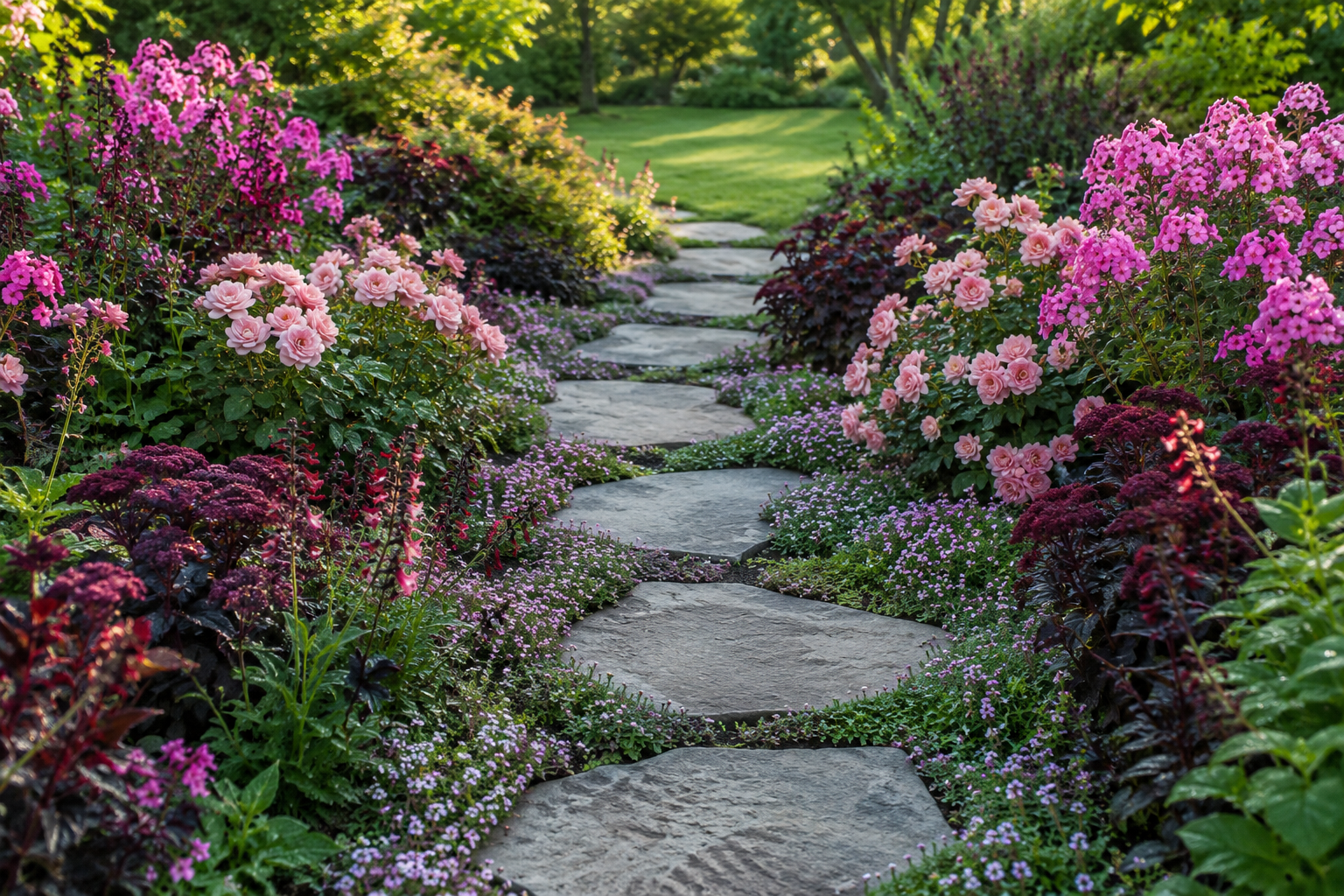
Stepping stones feel softer and more romantic than a solid sidewalk. They invite flowers to come close and make even a short walk feel like part of the garden. That informality can also create problems: awkward spacing, rocking stones and plants that eventually swallow the route.
Plan the walking surface first. Once the route feels natural and secure, use fragrance and color to frame it rather than compete with it.
Begin with the way you naturally walk
Lay the stones on bare ground or short grass before digging. Walk the route several times in both directions and adjust each stone to meet your natural stride. A fixed measurement is less useful than testing the actual path.
Each stone should be broad enough for a confident step, stable underfoot and set so it does not rock. Keep every surface visible from the entrance. If the route must accommodate wheels, mobility aids or code-required access, use a smooth continuous surface instead of loose or irregular stones.
Think about water too: paving stones let water soak into the spaces around them instead of creating the continuous runoff of solid paving. The University of Minnesota Extension recommends paving stones as one way to reduce walkway runoff.
Build fragrance in three layers
Fragrance is more effective when it appears at several heights rather than coming from one isolated plant.
At your feet
Creeping thyme releases aroma when brushed and naturally suits sunny pathway edges.
At knee height
Dianthus contributes spicy, clove-like fragrance and compact pink flowers.
In the outer layer
Fragrant roses and garden phlox carry scent higher while enclosing the path.
Smell named cultivars before buying whenever possible. A tag saying rose, phlox or dianthus does not guarantee strong fragrance, and scent intensity can change with temperature, humidity and time of day.
Keep low plants close—and taller plants back
Low groundcovers soften hard edges, but they should not hide the landing surface. Plant creeping thyme beside the stones rather than beneath each footfall, then trim runners before they cover the edges. NC State Extension describes creeping thyme as a full-sun groundcover suited to gritty, rocky and well-drained sites.
Place dianthus behind the thyme. Its compact foliage keeps the lower layer neat while bringing fragrance close to the walker. Dianthus needs good drainage and air movement; NC State Extension cautions that wet or poorly ventilated conditions can encourage root rot and fungal disease.
Roses and tall phlox belong farther from the route. Plan for their mature width—not the nursery-pot size—and direct thorny rose growth away from ankles and clothing.
Use burgundy foliage to enrich the pink
A path planted entirely in pink can look flat between bloom periods. Burgundy-leaved sedum or another compact dark-foliaged perennial gives the design depth and makes pale roses and dianthus appear brighter.
Repeat the burgundy plants on both sides instead of scattering them randomly. Repetition leads the eye along the route and keeps the bed cohesive when fewer flowers are open.
Give garden phlox room to breathe
Garden phlox brings height, summer color and light fragrance, but crowding it tightly can encourage mildew and leaning stems. Plant it in the outer layer with sun on its foliage and space for air to circulate.
NC State Extension recommends moist, fertile, well-drained soil, good spacing and watering at soil level rather than overhead to help limit powdery mildew.
Plan for different moisture needs
Thyme and dianthus dislike soggy soil, while roses and garden phlox appreciate steadier moisture. Improve drainage throughout the bed, then water deeper-rooted outer plants slowly and directly during dry periods. Keep mulch thin around creeping stems and away from crowns.
Choose a pathway material that fits the job
Affiliate notice: The following recommendations contain paid Amazon links. As an Amazon Associate I earn from qualifying purchases.
- Pink Daisy Stepping Stones add a playful floral accent.
- Rubber Stepping Stones offer a lightweight, understated stone-look option.
- Coco Coir Garden Walkway creates a continuous natural-fiber surface through planted areas.
Follow the manufacturer’s installation instructions and assess every route for stability, drainage and trip hazards. Decorative products are not substitutes for a professionally designed accessible walkway.
Maintain the opening, not just the flowers
Walk the path every few weeks during active growth. Trim thyme from stone surfaces, shear spent dianthus, redirect rose canes and cut back phlox that leans across the route. Check for rocking or sunken stones after heavy rain and freeze-thaw cycles.
The best stepping-stone garden feels lush from the side and obvious underfoot. Keeping that balance is easier than reclaiming a path after it disappears.
Ready to plant the whole path?
My 6 × 10-foot Fragrant Stepping-Stone Garden Plan includes a measured five-stone layout, 26-plant shopping list, pink-and-burgundy palette, installation guidance and seasonal care calendar for full-sun gardens in USDA Zones 6–9.