
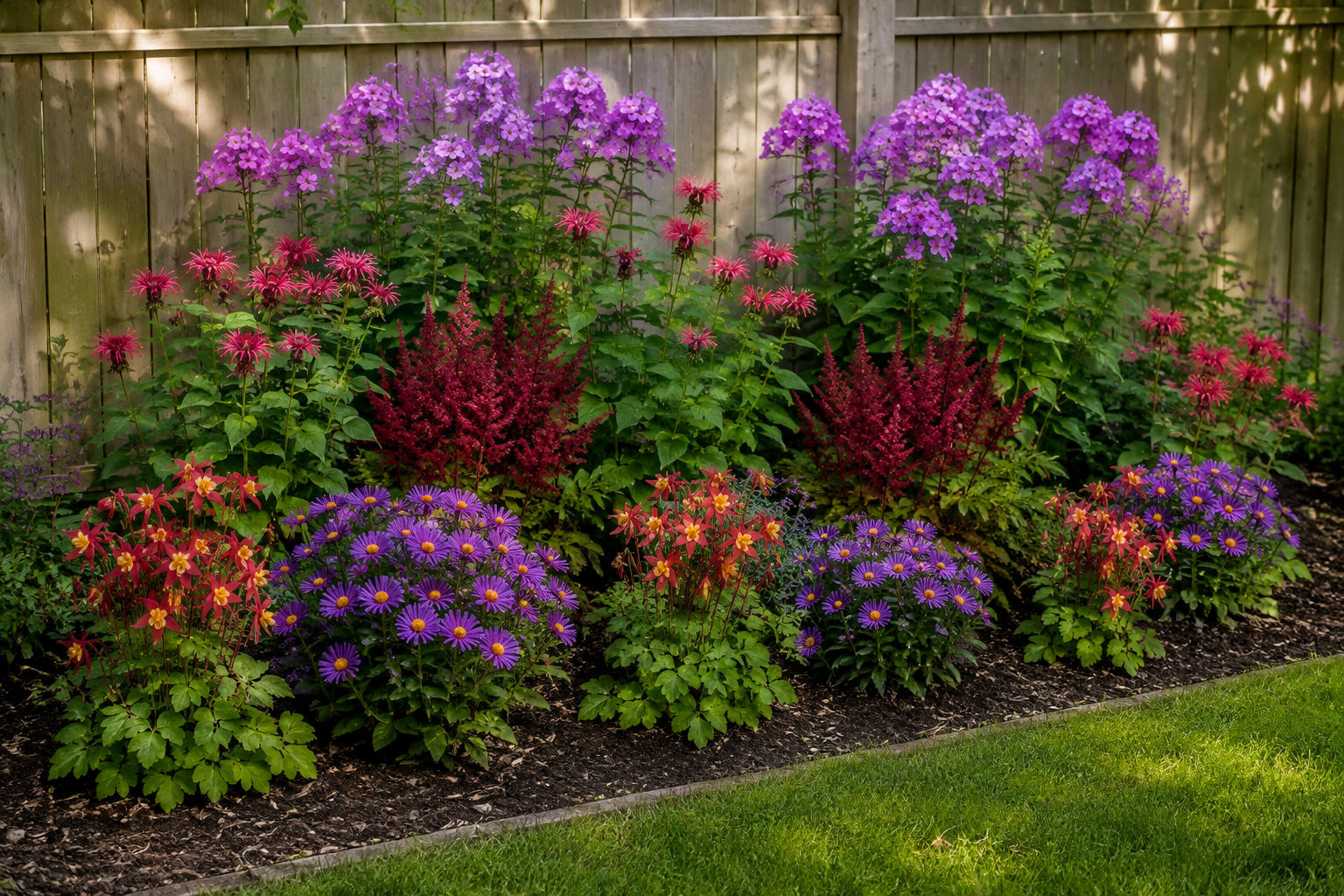
Many cutting-garden plans assume an open, sunny yard. That can leave gardeners with a porch shadow, tree canopy or east-facing bed wondering whether bouquets are possible in their space.
They are—but part sun requires a more thoughtful plant list. Instead of asking sun-loving flowers to struggle, build the garden around perennials that can bloom well with several hours of direct light and use a sequence of bloom times to keep new stems coming.
First, make sure “part sun” is really part sun
Part sun generally means approximately four to six hours of direct sunlight per day. Photograph or observe the bed in the morning, at midday and later in the afternoon. A bright space is not necessarily receiving direct sun, and the distinction matters for flower production.
Morning sun with afternoon shade is often a useful combination, particularly in warmer climates. A site with only dappled light or fewer than four hours of direct sun may still grow lovely foliage, but flowering can be lighter and stems may lean toward the available light.
Be realistic about shade: part-shade-tolerant does not mean flowers perform identically in deep shade. Illinois Extension notes that plants such as baptisia can tolerate part shade but may bloom less and become leggy when light is insufficient.
Choose flowers for more than color
A useful bouquet needs varied forms as well as different colors. Select at least one flower for each role:
Focal stems
Larger clusters, such as garden phlox, give an arrangement visual weight.
Airy texture
Astilbe plumes and columbine stems soften the spaces between focal flowers.
Strong contrast
Bee balm and Stokes’ aster contribute distinctive shapes and saturated color.
Check mature height, width, soil moisture and drainage before buying. Wild columbine naturally favors shade to partial shade, while garden phlox, bee balm and Stokes’ aster tolerate part sun when their other needs are met. Choose named cultivars only after confirming they fit the available space and your USDA hardiness zone.
Plan for a sequence, not one big bloom
A mixed seasonal cutting garden should not peak for only two weeks. Layer the plant list by bloom period: columbine for spring, astilbe and Stokes’ aster for early summer, bee balm for midsummer and garden phlox for late summer.
The garden will always have a quieter period, but overlapping bloom windows provide something new to gather while allowing earlier plants to recover. This succession also keeps the bed attractive when viewed from the house instead of making it look like a production row.
Leave enough space for healthy stems
Cutting gardens are often planted densely in photographs, but a perennial bed needs room for mature clumps. Good spacing allows air to move through the foliage and gives you space to reach stems without crushing neighboring plants.
This is especially important for garden phlox and bee balm, which can develop powdery mildew. Water at soil level when possible, avoid wetting foliage late in the day and divide or thin crowded clumps. Illinois Extension recommends pruning garden phlox for good air circulation and removing spent flowers to extend its bloom period.
Harvest at the right stage
The prettiest flower in the garden is not always the best flower for the vase. Penn State Extension explains that fully opened blooms may fade quickly indoors and that each species has an ideal harvest stage.
- Cut during the cool morning after dew has dried and before midday heat stresses the stems.
- Use clean, sharp snips to avoid crushing or tearing plant tissue.
- Place stems directly into clean water rather than carrying them dry around the garden.
- Remove leaves below the waterline so submerged foliage does not foul the water.
- Harvest lightly during the first year while perennial roots and crowns establish.
Cut without emptying the garden
A home cutting bed can serve both the vase and the view. Take a few stems from each repeated group rather than stripping one plant completely. Cut just above a healthy leaf pair or side shoot when the plant’s growth habit allows it, and leave some flowers for pollinators and seed.
Deadheading after bloom can encourage additional flowers on some plants and keeps the bed tidy. Others, including columbine, may be allowed to form selected seed heads so the planting can renew itself. The goal is a gentle rhythm of cutting, recovery and rebloom—not maximum extraction.
Let foliage carry the quiet moments
Part-sun plants often offer beautiful leaves: ferny columbine foliage, glossy astilbe leaves and the upright green structure of phlox. Arrange the garden so those textures overlap visually after a bouquet is harvested. A visible mulch layer and a defined edge will also make a temporarily quieter bed look intentional.
Ready for jewel-tone bouquets?
My 4 × 8-foot Jewel-Tone Cutting Garden Plan includes a measured layout, 14-plant shopping list, bouquet roles, harvesting guidance and a seasonal cutting calendar for part-sun spaces in USDA Zones 5–8.