
Mailbox gardens look simple because they are small. In reality, they ask plants to grow in one of the yard's toughest little spaces: reflected heat from pavement, compacted soil, irregular water and—where roads are treated in winter—salt spray or salty runoff.
The prettiest design will struggle if it blocks the carrier, traps water around plant crowns or depends on delicate plants at the road edge. Begin with function, then use repeated color and layers to turn that practical space into a welcoming garden.
Keep the mailbox usable first
Before outlining the bed, open the mailbox door fully and look at how the carrier approaches it. Leave the road-facing side unobstructed and preserve a firm place to stand. Keep plants away from the post, hinges, flag and any numbers that need to remain visible.
Plan a small maintenance pocket behind or beside the post so you can weed, water and reach the box without stepping on flowers. If the site is close to an intersection or driveway, protect sightlines by keeping the roadside layer low.
A practical rule: design the clear access area at mature plant size—not the size of the plants in their nursery pots. Compact perennials can still spread far enough to crowd the box after a few seasons.
Watch what happens after heavy rain
Roadside beds may receive water flowing off pavement, but that does not always mean the plants have reliable moisture. Runoff can rush through, erode mulch or collect in one low spot while the rest of the soil dries quickly.
Observe the area during or just after rain. If water stands around the post or planting area, correct the drainage before planting. Loosen compacted soil where permitted, add organic matter based on soil conditions and shape the bed so water soaks in without burying plant crowns or washing soil into the road.
Treat salt tolerance as protection—not a promise
Deicing salt can reach plants through both spray and soil. Illinois Extension explains that salt on leaves and stems can pull water from plant cells, while salt that accumulates in soil can interfere with water uptake.
Choose sturdy plants with some tolerance for heat, drought and roadside exposure, but remember that tolerance is not immunity. Avoid piling salty snow on the bed. In spring, watch for browning on the road-facing side and water deeply when conditions allow to help move accumulated salts through well-drained soil. A temporary burlap screen can help where spray is severe.
Arrange the garden in three useful layers
Roadside edge
Use the shortest, toughest plants where visibility and access matter most.
Middle color
Repeat compact bloomers in small groups so the bed looks intentional from a distance.
Back layer
Place taller flowers and grasses behind the mailbox to create a backdrop without hiding the door.
This front-to-back arrangement makes the mailbox feel framed instead of swallowed. It also gives the garden a clear shape even when only part of the planting is in bloom.
Build a sunset palette through repetition
Warm coral, orange, gold and burgundy are especially effective near the road because they remain noticeable from a distance. Instead of using one of everything, repeat a few dependable plants across the bed.
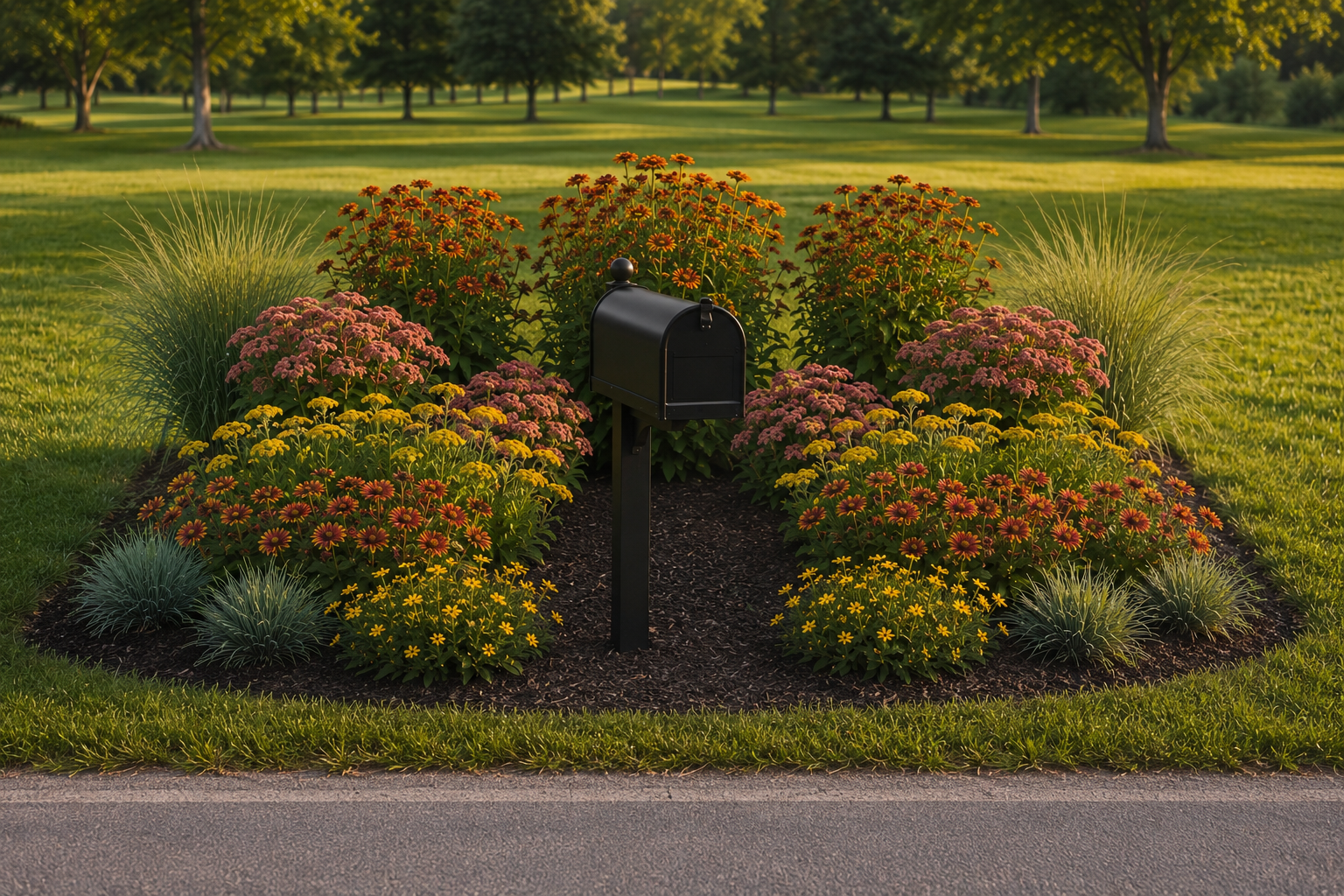
In the Sunset Mailbox Garden, low golden coreopsis and blanket flower carry summer color near the front. Yarrow adds a sturdy middle layer, sedum contributes burgundy-toned structure and late-season interest, and compact ornamental grass softens the arrangement. Taller orange-red heleniums sit behind the mailbox, where they can create a warm backdrop without blocking access.
Always confirm each selection's hardiness, mature size and local performance before buying. Salt exposure, winter wetness and regional heat vary too much for any single plant list to work identically everywhere.
Make a small bed easier to maintain
Prepare the whole planting area before installing individual plants. Water deeply during establishment, then check the bed more often than an interior garden because pavement can increase heat and drying. Use a modest mulch layer to conserve moisture, keeping it away from crowns and the mailbox post.
Deadhead only where it improves repeat bloom or neatness. Leave sturdy sedum heads and ornamental-grass texture through winter if they remain attractive, then cut them back before new spring growth begins. Each season, trim the roadside edge before it interferes with visibility or access.
Check the rules before you dig
The strip beside a road may be part of a public right-of-way, and mailbox placement can be subject to postal or local requirements. Before enlarging a bed, adding edging or digging deeply, check local rules and call the appropriate utility-marking service. Keep hard edging, stakes and tall plants safely away from vehicles, snowplows and the carrier's route.
Want the planting layout ready to follow?
My 4 × 6-foot Sunset Mailbox Garden Plan includes a measured 19-plant layout, warm sunset palette, clear mailbox-access pocket, shopping list, installation guidance and seasonal care for full-sun gardens in USDA Zones 6–9.