Watch a bee move through a patch of flowers and the visit can seem almost incidental: land, gather, leave. But as bees travel between blooms, they carry pollen that allows many plants to form seeds and fruit. That simple exchange connects the ornamental garden to farms, natural landscapes and the food on our tables.
The USDA reports that more than 100 crops grown in the United States depend on pollination. Bees are not the only pollinators, but they are among the most important - and home gardens can give them useful places to feed and nest.
Honeybees are only part of the story
Honeybees are familiar because they live in managed colonies and produce honey. Native bees include bumble bees, mason bees, leafcutter bees and many solitary species with very different nesting habits and life cycles.
Some are active early in spring; others appear later. Some collect pollen from many kinds of flowers, while others have close relationships with particular plants. Supporting bee diversity means offering variety rather than designing the entire garden around one recognizable species.
A helpful shift: Think beyond attracting bees for a photograph. A genuinely supportive garden offers food over time, nesting opportunities and protection from avoidable chemical exposure.
Flowers are food - but timing matters
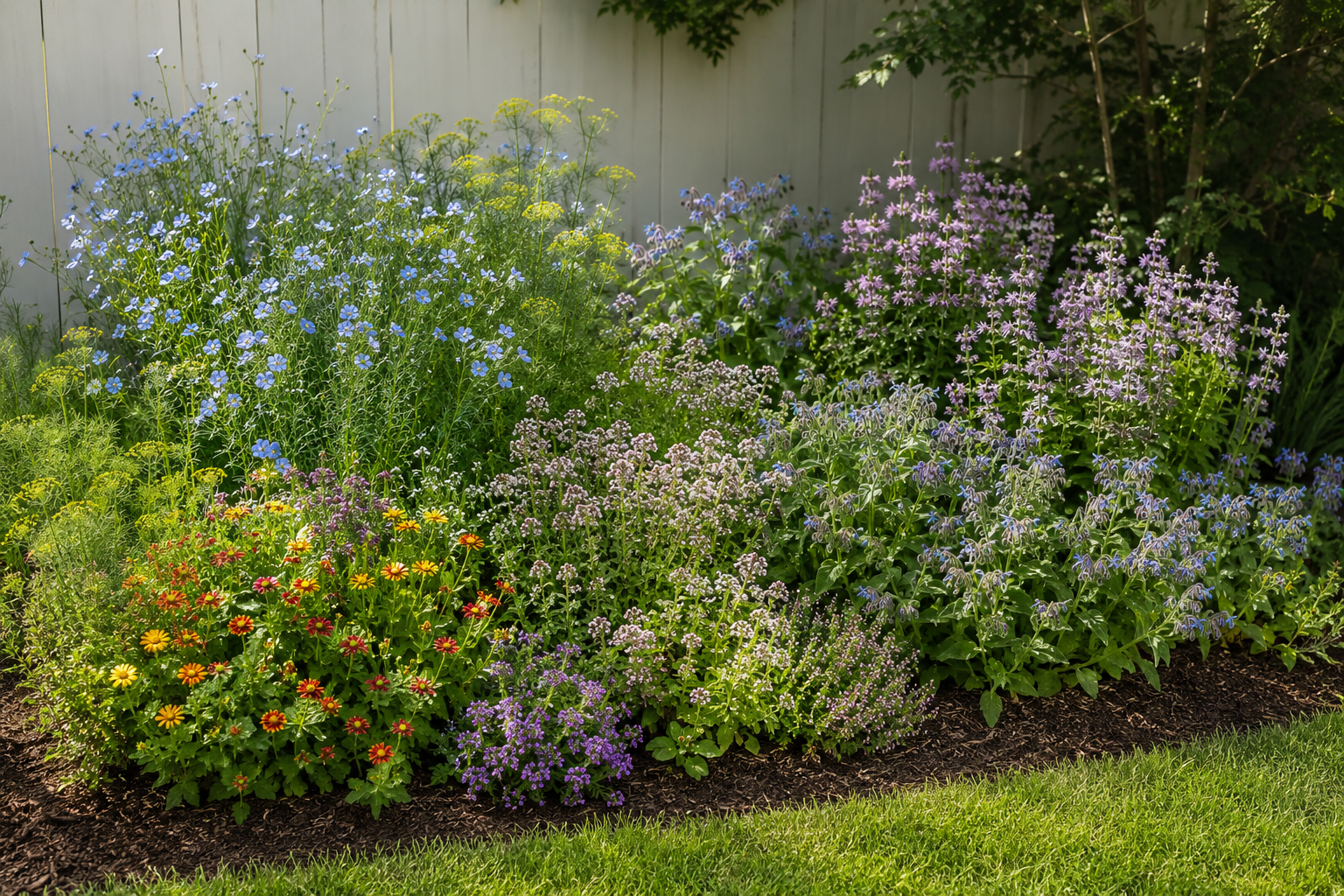
A garden overflowing for two weeks and empty for the rest of the season creates a feast followed by a long gap. Aim for overlapping bloom periods from early spring through autumn. Trees, shrubs, perennials, herbs and annuals can all contribute.
Early season
Spring-blooming trees, shrubs and low flowers help bees emerging when food can still be scarce.
Summer
Flowering herbs, borage, flax and many cottage flowers sustain activity through the busiest growing months.
Late season
Asters, goldenrods and other autumn bloomers help extend the garden's usefulness before winter.
Choose flowers with different shapes and heights, and repeat them in visible groups. A bee can forage more efficiently from a generous drift than from one isolated bloom hidden among foliage.
Native plants make the garden locally useful
Plants native to your region have long-standing relationships with local insects and often fit local rainfall and seasonal patterns. They do not have to fill every inch of the garden. Begin by adding a few well-chosen native species to the ornamental plants and herbs you already enjoy.
Ask a local native-plant society, extension office or reputable nursery for plants suited to your region, soil and light. “Native to North America” is too broad to guarantee that a plant belongs in every state or ecosystem.
Bees also need somewhere to live
Not every bee lives in a hive. Many native bees nest alone in the ground, hollow stems, old beetle tunnels or small natural cavities. A perfectly sealed and heavily mulched landscape may provide flowers while offering very little nesting habitat.
The Xerces Society recommends four central actions: grow pollinator-friendly flowers, provide nest sites, avoid pesticides and spread the word. Depending on your space, habitat might include a small patch of undisturbed bare ground, hollow stems left standing through winter, a brushy edge or carefully maintained nesting materials.
Do not assume every commercially sold “bee hotel” is automatically beneficial. Poorly designed or neglected nesting blocks can collect moisture, parasites or disease. Follow research-based construction and cleaning guidance if you install one.
Offer water without creating a hazard
Bees need water, especially during warm, dry weather, but a deep open bowl can be difficult for them to use safely. A shallow watering station with textured landing places gives visiting insects somewhere to perch while they drink. Keep the water fresh, rinse the station regularly and place it near flowers where you can easily remember to refill it.
A pretty practical option: These flower-shaped bee watering stations add small landing basins among the plants without turning the garden into a large water feature. Check them often so the water stays clean.
Affiliate notice: This Amazon link is a paid affiliate link. As an Amazon Associate, PetalAndPathway earns from qualifying purchases at no additional cost to you.
What to look for in a bee house
If you decide to add a house for solitary cavity-nesting bees, choose function before decoration. A responsible design should include:
- Nesting tunnels approximately 6 inches deep, closed at the back and smooth inside
- Removable, replaceable or openable nesting tubes or trays
- A sturdy roof with enough overhang to help keep the tunnels dry
- A secure mounting method that prevents the house from swinging
- Clear seasonal care and cleaning instructions
Avoid houses made primarily from shallow, permanently glued bamboo pieces or fixed drilled blocks that cannot be opened or replaced. If a product does not explain how it should be maintained from year to year, it is better treated as garden decoration than pollinator habitat.
Leave a little winter structure
Fall cleanup does not need to remove every stem and seed head. Leaving some sturdy stems standing can preserve nesting material and shelter while adding winter texture. In spring, delay cutting or disturbing those areas until conditions have warmed and insects have had time to emerge.
You can still keep the garden intentional. Trim highly visible edges, remove diseased material and leave selected habitat pockets farther inside the bed.
Reduce pesticide risk
A garden planted for bees can become dangerous if flowering plants are exposed to insecticides. Fungicides and herbicides can also affect pollinators directly or remove floral resources. “Organic” does not automatically mean harmless to bees.
Begin with prevention: choose plants suited to the site, encourage natural predators, tolerate minor cosmetic damage and identify the problem before treating it. If a pesticide is genuinely necessary, read and follow the complete label, avoid treating open flowers or active foraging bees, prevent drift and choose the least hazardous effective approach. The EPA's pollinator resources offer additional guidance.
Small gardens still count
You do not need a meadow or an apiary. A sunny border, several large containers or a flowering herb patch can become one useful stop within a larger neighborhood network. The goal is not perfection. It is to make the space you manage a little richer in food, shelter and safety.
Start with what you can maintain. Add a cluster of seasonally appropriate flowers, let a few herbs bloom, preserve one nesting area and reconsider routine pesticide use. Small choices become more meaningful when many gardeners make them.
Ready to create a place for bees?
The 4 × 8-foot Bee-Friendly Seed Garden Plan combines a measured mixed-light border with separate container and trellis placements for the larger plants in a 15-packet bee garden bundle.
Affiliate notice: The SeedsNow link below is a paid affiliate link. PetalAndPathway may earn a commission at no additional cost to you.